mood_bad
Being Terrorised by Your Own FTP
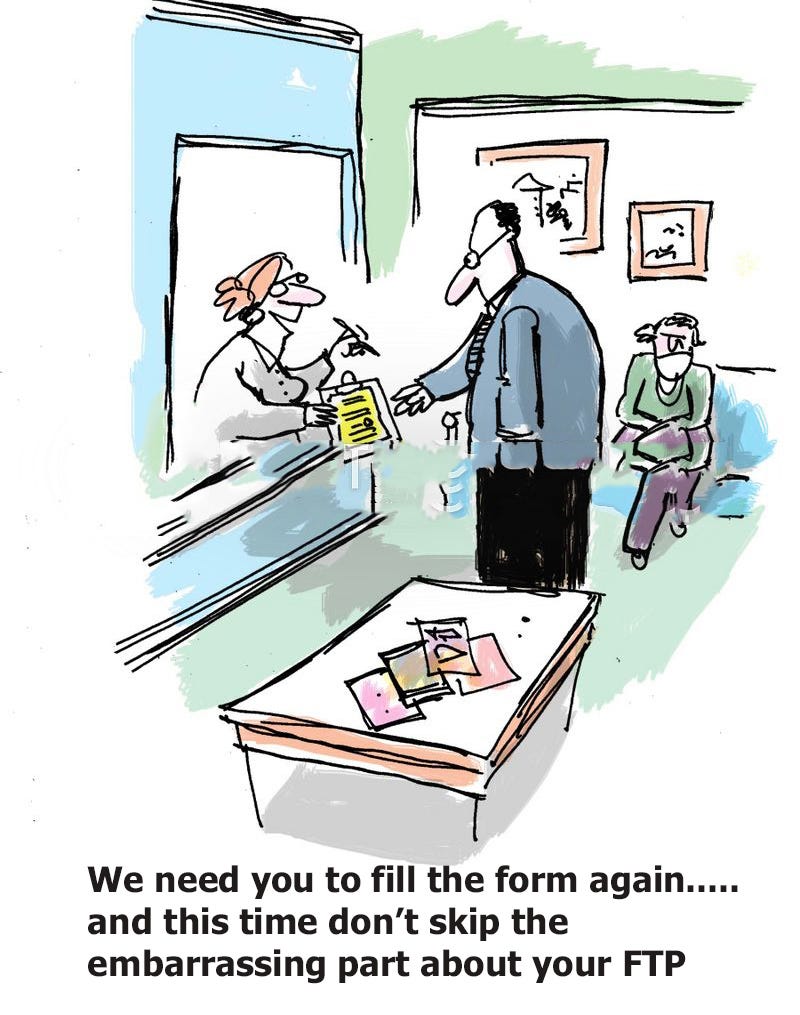
In January I caught COVID-19 for the second time and needed a week’s break from training. This was relatively short compared with the 4 weeks off the first time around. But what surprised me was how demoralised I felt seeing my FTP fall off a cliff.
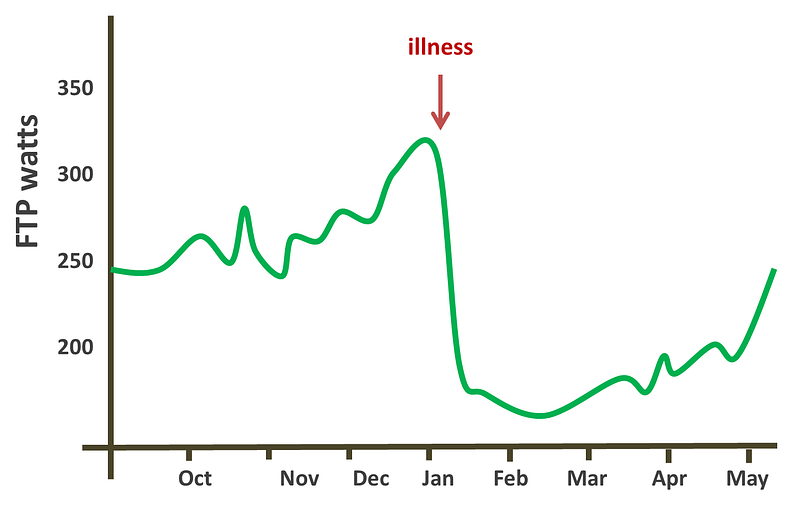
As I watched my numbers nosedive, I couldn’t face getting back on the bike. Every effort was a reminder of how bad things had become. My previously PR/PB FTP of 280 seemed so distant that it might as well have been set by a different athlete. Only once it was lost, did I realise how good 280w for 60mins actually is.
But the problem was much confounded by a fear of failure, or rather a fear of another low performance number. This was a vicious circle in which I had become terrorised by my own FTP. What little motivation I had, all but evaporated as I resigned myself to a sick role, in which I would forever be a shadow of my former self.
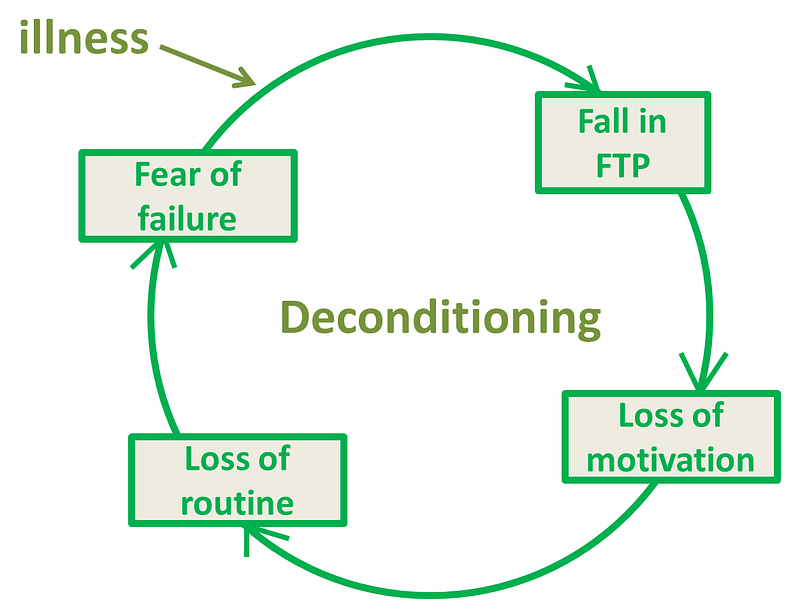
This problem is well known in medicine as patients take on a sick role, in which self-identity becomes increasingly reinforced by behaviours related to being ill rather than being well.
Now there is no denying that my illness caused a big fall in FTP, but it is important to realise in almost all cases this is reversible. Looking at the graph again, we can see that there was an additional fall in FTP (starting mid-January) related to demoralisation, and this extended the decline by about a month!
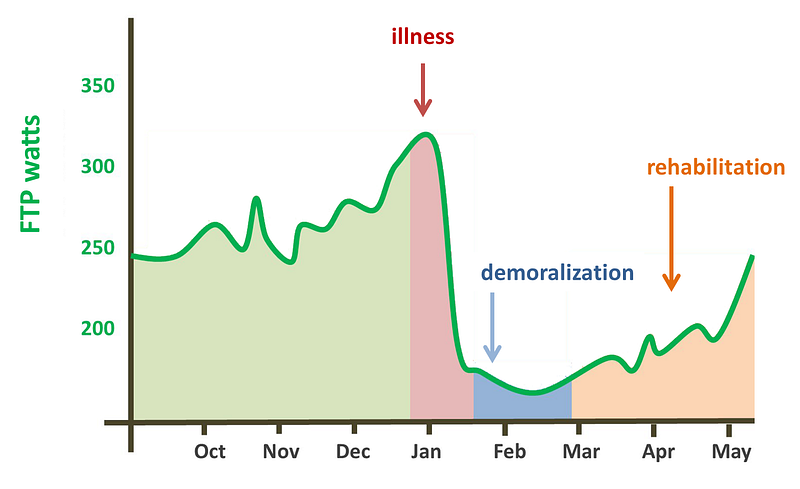
An interesting observation is that this process can also occur after an injury, after a winter break, after a vacation, or even after a change of turbo trainer! Yes, I have seen athletes lose heart after a recalibration of their trainer when their previous FTP mysteriously falls from 315 to 290w. Nothing had actually changed physiologically, but now when they see the low values they feel lethargic and unmotivated. As a result, they reduce training, and gradually the prophecy of a dip in FTP comes true!
This is a classic case of being terrorised by your own FTP. If you ride purely to see big numbers on the screen, or only to set a PR/PB then you are at risk of “FTP demoralisation syndrome“. This is especially the case if you are riding mostly hard sessions (e.g., always threshold, always HIIT, or always short Zwift races). It’s fun whilst numbers are going up early on, but it becomes increasingly difficult to maintain… until you are hanging on by a thread. When it snaps you might never go back to this level of effort. And that, guys, is why periodisation of training exists… training styles such as POLARISED help by focussing on easier Z2 rides which help cement those gains from high intensity Z4, Z5, and Z6 efforts.
Also, it is important to say that as an athlete you should have broader goals than just improving your power; for example completing a certain event, keeping a good routine, and not forgetting staying healthy in general!
OK, enough with the problems, let’s look at some solutions.
query_stats
What to Do When Power Numbers Look Low
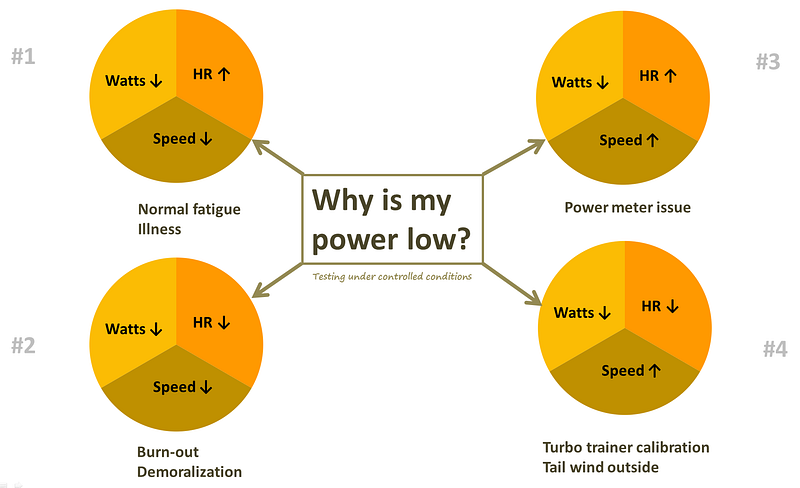
If your power numbers look low and you do not know why, you can troubleshoot by testing under controlled conditions such as an 8-min tempo ride on the turbo trainer on a known flat course; measuring average HR, average watts, and average speed. Ideally, do this more than once, with a recovery day in between.
looks_one
Scenario 1: Low Power, High HR
If your power is low whilst your heart rate is *high*, this means your biological efficiency has fallen, and this usually translates into a slower time on a known course. When these three indicators line up, then post-race fatigue or illness are the most likely causes. It should be pretty obvious if you are feeling unwell compared to just completing a block of hard training. In any case, the answer is to take a good rest period and build slowly from less than your peak FTP.
looks_two
Scenario 2: Low Power, Low HR
If your power is low whilst your heart rate is *low*, it is true that this can happen with acute illness as well, but if you are not feeling unwell it could be early signs of over-training (burn-out) or it could be demoralisation as discussed above. To distinguish between the two, ride your best effort with power and heart rate data hidden (again, more than once). If the blind test corrects the data, I would say FTP demoralisation is the cause. If the blind test corrects only the speed data, see below.
looks_3
Scenario 3: Low Power, High HR, High Speed
If your power is low and HR high but speed is also high, this suggests a power meter issue. Power meter drift, miscalibration, and errors are very common… for example, even the temperature of the room used to play havoc with my PowerTap hub. It is possible to work out power from a steep climb to check your power meter IRL, but if it is an indoor issue I would test once more, and if not solved, simply reset your FTP lower and swallow your pride! Unless you can do hanging weights or triangulate, who knows the true value!?!
looks_4
Scenario 4: Low Power, Low HR, High Speed
If your power is low and HR relatively low but speed appears to be normal or high (under controlled conditions), then maybe your turbo-trainer is miscalibrated. I have had this issue a number of times, notably when I first tried Favero power pedals and again when I swapped to a Wahoo KICKR SNAP. If, however, this is outdoors, then the usual explanation is favourable environmental conditions such as a strong tailwind or a subtle downhill gradient.
psychology
How to Recover from FTP Demoralisation
In a nutshell, you need to break the link between riding satisfaction and seeing a big number on the screen!
- Ride without data
- Ride to a new target
- Ride a different event or bike
It is an excellent training experience to ride without data occasionally in order to learn how it feels to ride in Z2, Z3, Z4, and Z5.
Schedule new targets for yourself which are not based on FTP alone, even completing a 50km ride or completing a sportive.
If you still feel stuck, commit to wiping the slate clean and reset your FTP to an unrealistically low number (e.g., you were FTP 300 but you reset it to FTP 200) (👀). Intervals.icu, Strava, and Zwift allow a manual override. This will disturb your training zones of course, but only for a short time, and in that time you will set new PR/PBs regularly until you settle on a new FTP. Remember, FTP is not static or your best-ever result, it is extremely dynamic (linksee my blog here) and sometimes it naturally goes down, there is no shame in that at all. Well, almost 😂